PERFORMANCE:
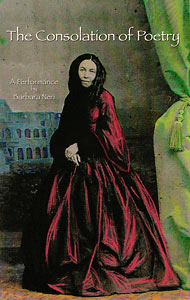
The Consolation of Poetry
Conceived, researched, written and performed by Barbara Neri
The Consolation of Poetry
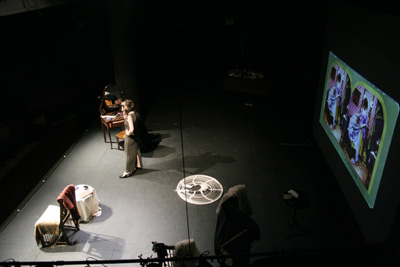
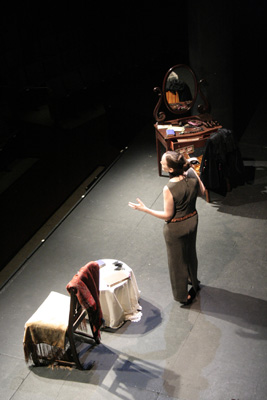
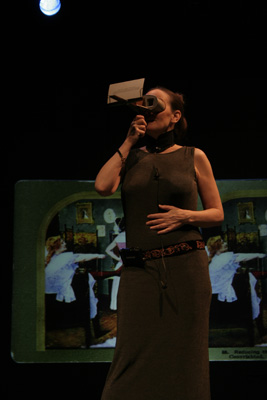
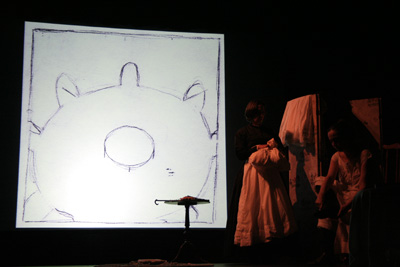
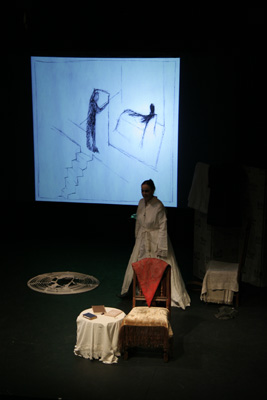
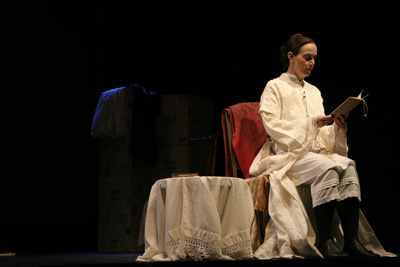
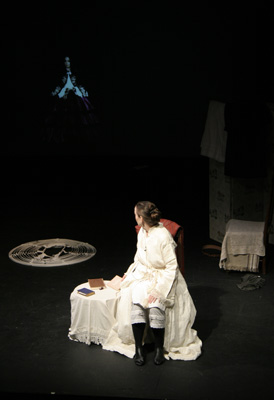
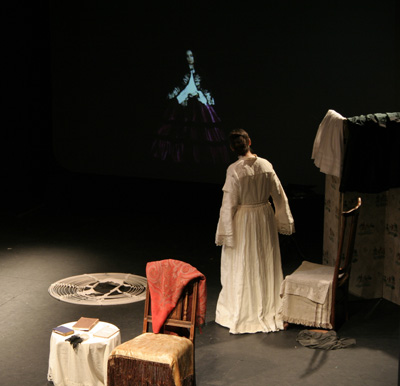
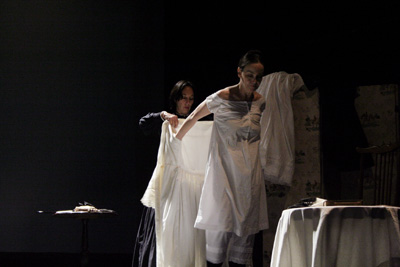
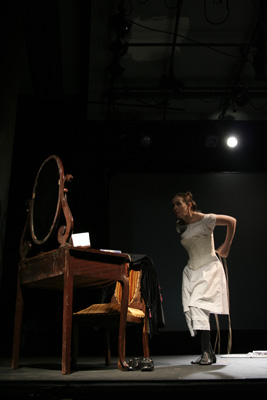
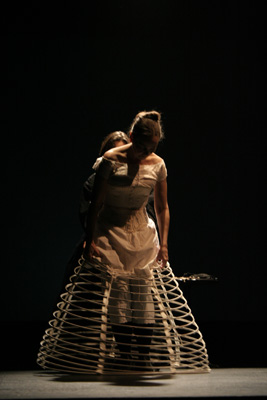
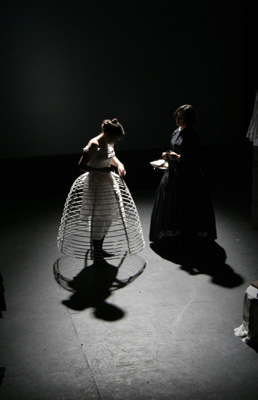
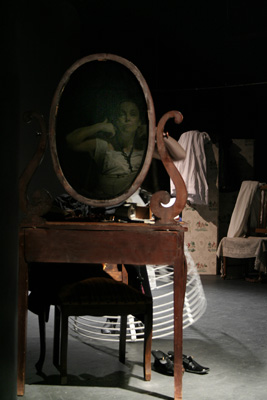
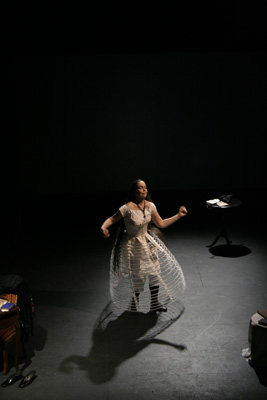
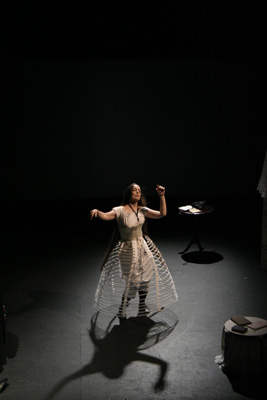
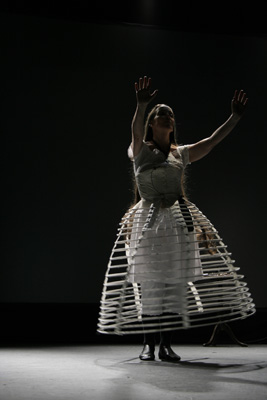
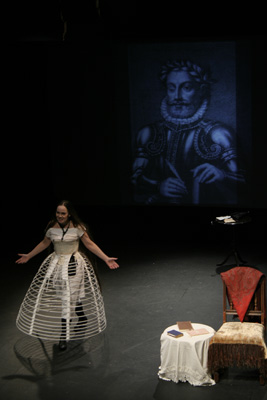
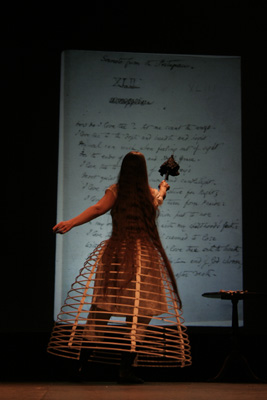
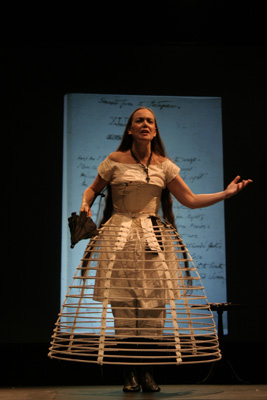
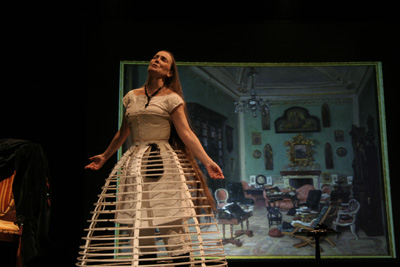
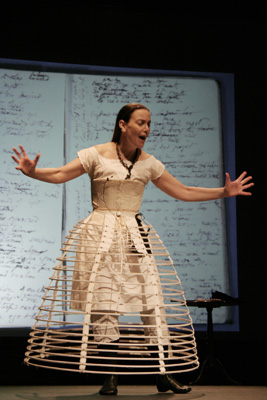
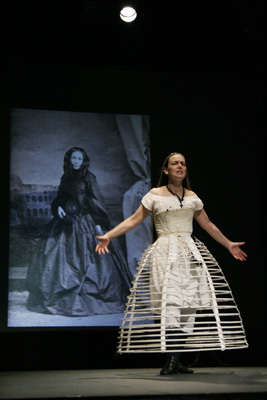
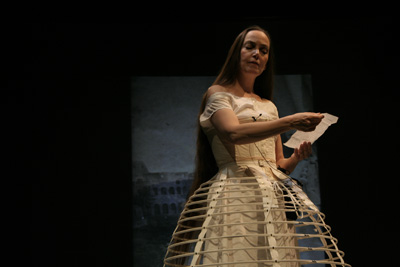
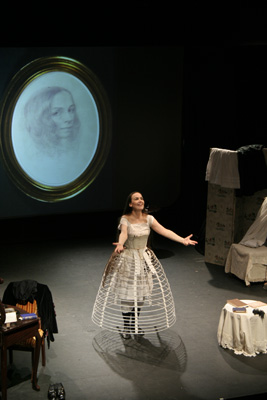
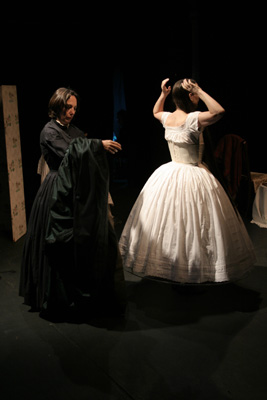
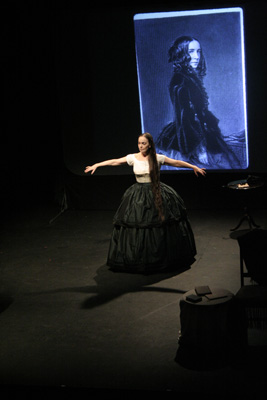
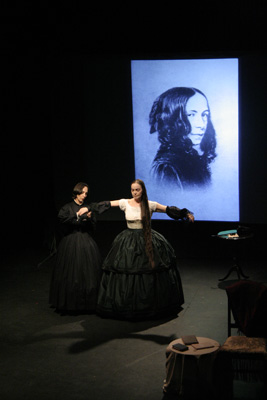
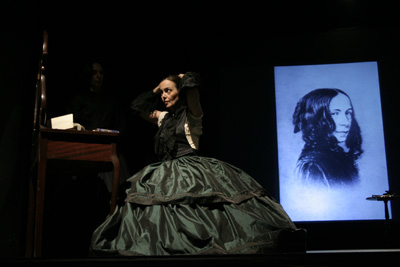
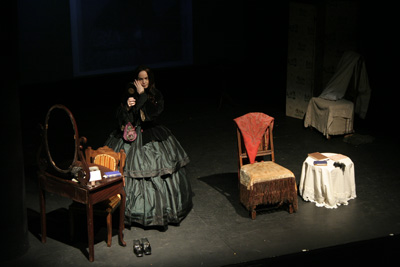
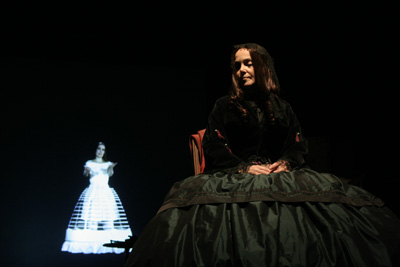
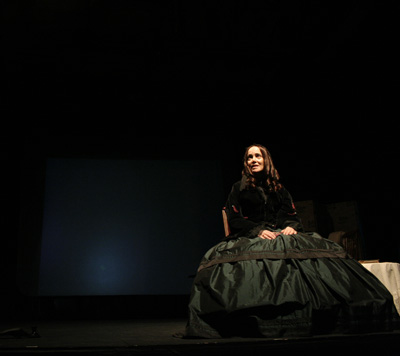
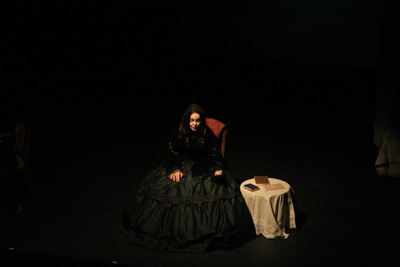
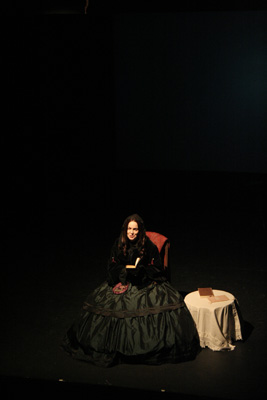
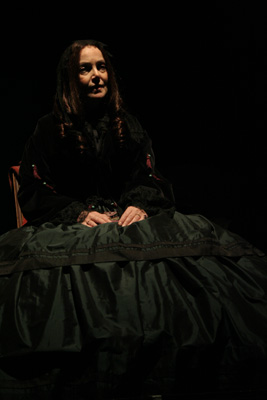
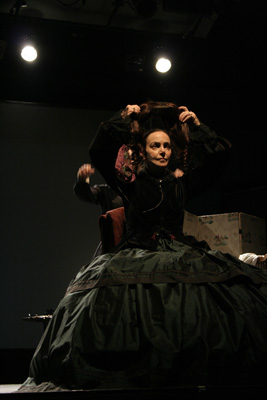
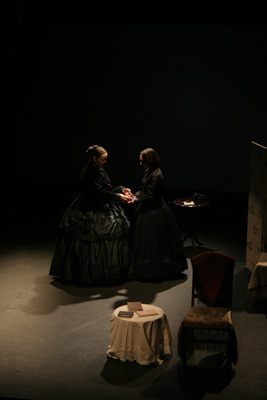
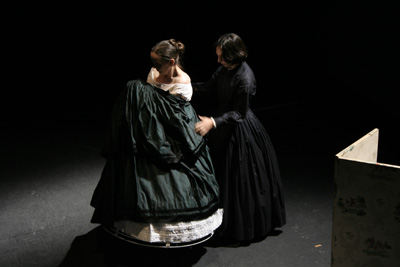
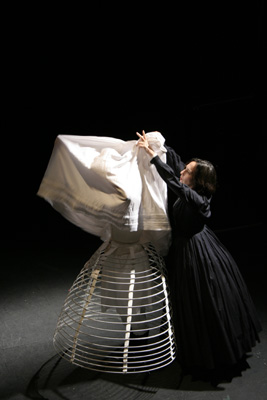
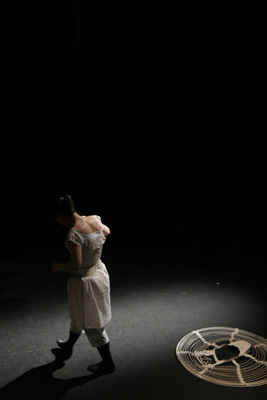
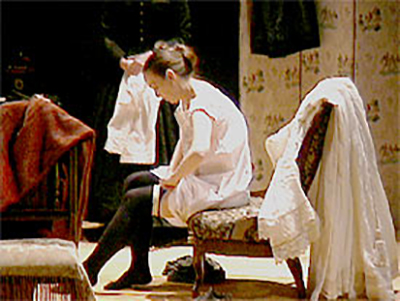
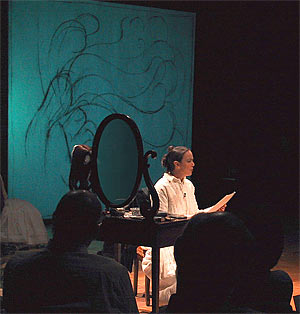
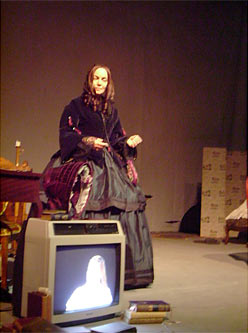
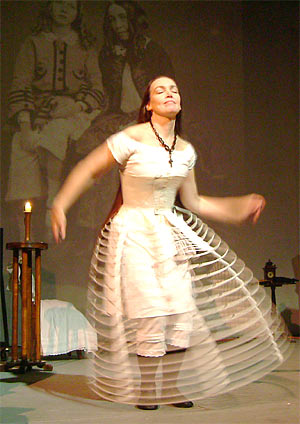
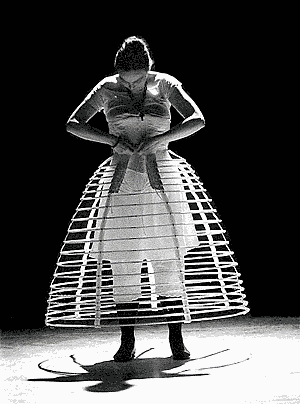
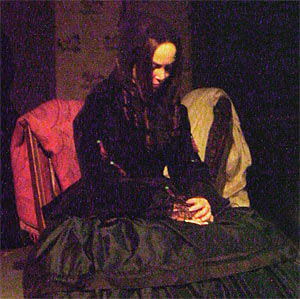
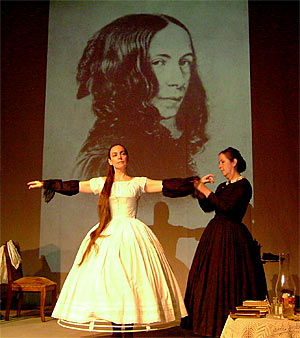
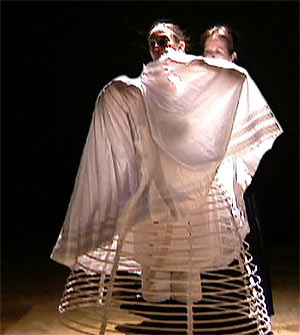
The underpinning action of this solo performance is the process of Barbara Neri beginning as herself and becoming the Victorian poet Elizabeth Barrett Browning (born March 6, 1806, died June 29, 1861). The performance area is set as a dressing room consisting of a vanity with a two-way glass mirror, chairs, and screen. Elizabeth's ringlets, bonnet and other small accessories such as jewelry are placed on the vanity. Her silk and velvet mid nineteenth century garments are draped on chairs and over a screen. When Neri began researching what EBB wore, she found another story. This story is one layer of the performance and it is told through four interludes of dressing and un-dressing. A Dresser who makes four appearances heralded by a clock chiming the quarter hours assists Neri. The Consolation of Poetry received its NY Premiere when it was juried into the 2005 NY International Fringe Festival and presented at The Mazer Theater in Lower Manhattan. See Nate Baker's beautiful photography of this definitive performance below:
The Script was published in The Drama Review (T179) Fall 2003.
Go to TDR at MIT Press Journals to download a pdf copy. Click here to read the introduction & credits published with the script.
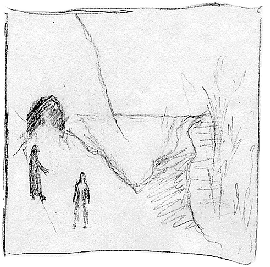
"10 Dream Drawings," projected during the performance, were published in the March 2004 issue of Performance Research (Routledge, Taylor & Francis Group)
Volume 9, No 1, March 2004. See a pdf of Neri's Artist Pages here.
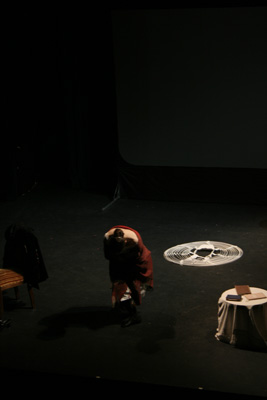
The Consolation of Poetry was first performed in March 2002, premiered by The Center for the Education of Women at the University of Michigan, Ann Arbor, Michigan as part of a campus wide semester on Gender, Power and Representation. The work was subsequently performed in The Sponberg Theater, October 2003 at Eastern Michigan University, Ypsilanti, Michigan. Read more details about the performance, and see pictures from both the UM and the EMU performances below.
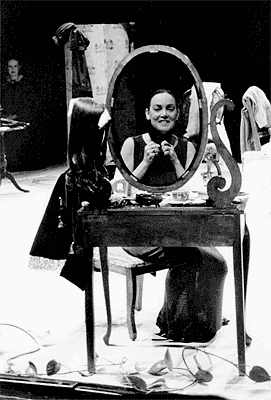
ABOVE:
See through a two way mirror, the Speaker's Monologue begins.
University of Michigan Media Union Theater
Ann Arbor, Michigan. March 2002
(Photo: Glenn Bering.)
The work begins with The Speaker's Monologue. Neri begins as herself and introduces the major threads of the performance by interweaving her thoughts with a humorous and insightful look at eight Victorian stereo cards of women dressing and undressing.
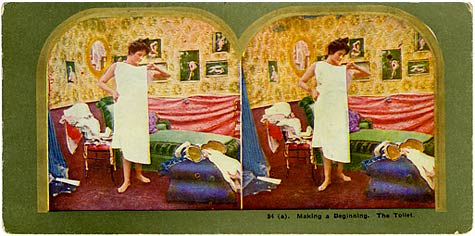
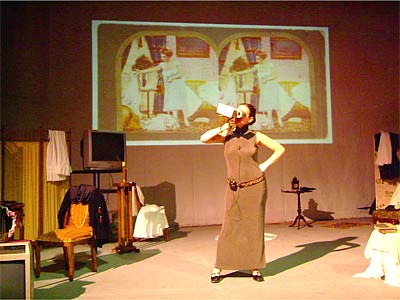
The Speaker's Monologue -
Sponberg Theater Eastern Michigan University
Ypsilanti, Michigan. October 2003
(Photo: Phil Linsalata)
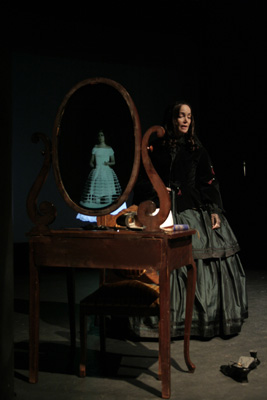
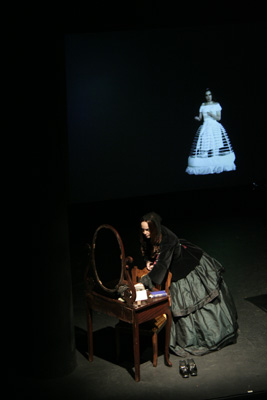
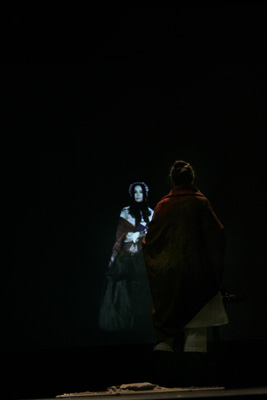
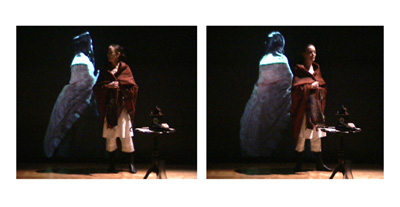
Two dialogues take place between the Speaker's opening monologue & Elizabeth's concluding monologue. In Dialogue 1, Elizabeth (actually Neri pre-recorded) appears as a life size digital video projection. Dialogue 2 reverses this and has the Speaker as the digital projection and Elizabeth is live.
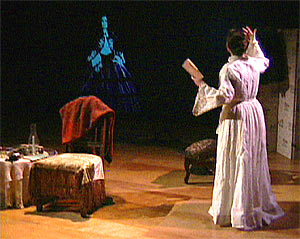
Dialogue 1
EBB appears dressed as she was in the Rome 1860 Alessandri photograph.
UM Media Union Theater, March 2002.
(vidgrab: Dave Tedesco)
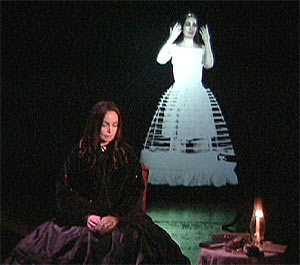
Dialogue 2
Elizabeth is dressed as she was in the 1858 Le Havre Image. UM Media Union Theater, March 2002. (Vidgrab: Dave Tedesco)
The video personas were also recorded as VHS head shots and can be played back on TV monitors for venues without rear screen capabilities.
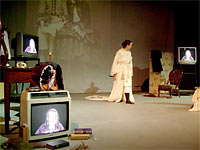
Dialogue 1 (left) The Speaker dialogues with Elizabeth who appears as a talking head via DVD on three TVs. Dialogue 2 (right) Elizabeth is live and the Speaker appears on three TVs. Sponberg Theater, Eastern Michigan University, October 2003.
(Photos: Justin Allen)
There are many texts referred to in this work. Boethius' The Consolation of Philosophy (524 BC) is among them. Boethius is both author and actor in his imaginary dialogue with 'Lady Philosophy' as Neri is within her work. The intimate self-analysis and quest for a higher truth of this ancient form is soothing to our troubled 21st century consciousness. Aspects of the classic dialogue form are integrated into this performance. However, Neri's dialogues with Elizabeth are artist to artist. Eventually in Elizabeth's concluding monologue, the tables are turned on philosophy when Elizabeth establishes the creative process as the ultimate consoling and governing process of life not the philosophical process of reason. Hence the title: The Consolation of Poetry. The interested reader may explore this aspect further in The Drama Review where the script and 83 endnotes were published in the fall 2003 issue.